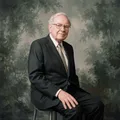
Warren Buffett doesn’t need an introduction. Berkshire Hathaway’s 13F filings are probably the most-watched institutional disclosures in finance. Every quarter, when the updated holdings become public, the entire market pays attention.
But by the time you’re reading about Buffett’s latest moves, he made those trades weeks or even months ago. Here’s what the actual data shows.
What stocks does Buffett own in 2026?
From the latest 13F filing, here are Berkshire’s largest positions by weight:
| Ticker | Weight | Company |
|---|---|---|
| KO | 15.9% | Coca-Cola |
| AXP | 14.0% | American Express |
| CVX | 13.3% | Chevron |
| OXY | 10.8% | Occidental Petroleum |
| AAPL | 9.6% | Apple |
| KHC | 8.2% | Kraft Heinz |
| BAC | 6.5% | Bank of America |
| CB | 6.2% | Chubb |
| MCO | 5.3% | Moody’s |
| GOOGL | 2.8% | Alphabet |
Note what’s changed: Apple is now only the 5th largest position at 9.6%. Two years ago, it was over 40% of the portfolio. Buffett has been systematically selling AAPL, with $1.3B sold in the latest filing alone, $3.2B the filing before, and $9.2B before that. That’s a massive position unwind over 2025.
Energy is now the big bet: Chevron (13.3%) and Occidental (10.8%) together make up nearly a quarter of the portfolio, with continued buying in CVX (+$882M latest filing).
What did Buffett buy and sell recently?
The February 2026 filing (reporting Q4 2025 positions) shows significant activity:
New positions opened:
- LLYVK (Liberty Media / Formula 1), $908M
- LLYVA, $406M
- NYT (New York Times), $352M
- FWONK (Formula One Group), $297M
Increased positions:
- CB (Chubb), +$1.85B (the largest single increase)
- CVX (Chevron), +$882M
- DPZ (Domino’s Pizza), +$109M
Reduced/closed positions:
- AAPL, sold $1.31B
- AMZN, sold $1.67B
- BAC, sold $855M
- DVA (DaVita), sold $665M
- POOL (Pool Corp), sold $370M
- AON, sold $191M
The theme: selling big tech (AAPL, AMZN) and financials (BAC), buying media and entertainment (Liberty Media, NYT, Formula 1), insurance (CB), and energy (CVX).
Backtest performance with the 45-day disclosure delay
Same methodology as all our wallets: buying at the price available on the day the 13F becomes public, not when the trade actually happened. The 45-day delay is built in. For more on how this delay works, see our 13F filing guide.
| Period | PnL | CAGR |
|---|---|---|
| 1 month | +2.82% | +40.21% |
| 3 months | +3.94% | +16.75% |
| 6 months | +6.48% | +13.41% |
| 1 year | +7.14% | +7.14% |
| 3 years | +45.00% | +13.18% |
Risk score: 0.17 · Sharpe ratio: 0.94 · Total trades processed: 179
The 3-year CAGR of 13.18% is solid but not spectacular, roughly market-matching. The low risk score (0.17) reflects Buffett’s preference for stable, large-cap businesses. This isn’t a high-volatility portfolio.
The 1-year return of +7.14% underperforms the S&P 500, partly because the heavy AAPL selling meant he missed some of the mega-cap rally, and partly because of the 45-day delay eating into entry prices.
How Buffett compares to other 13F funds
| Rank | Manager | 1Y CAGR | Sharpe | Risk |
|---|---|---|---|---|
| 1 | Mohnish Pabrai | +116.33% | 1.19 | 0.18 |
| 2 | Michael Burry | +28.50% | 0.79 | 0.24 |
| 3 | Carl Icahn | +17.04% | 0.44 | 0.32 |
| 4 | Pat Dorsey | +15.90% | 1.53 | 0.21 |
| 5 | Bryan Lawrence | +14.02% | 1.41 | 0.19 |
| 6 | Chris Hohn | +9.13% | 1.05 | 0.17 |
| 7 | Buffett | +7.14% | 0.94 | 0.17 |
| 8 | Bill Ackman | +3.09% | 0.63 | 0.22 |
We track 11 major 13F filers. Buffett ranks 7th by 1-year CAGR, but his 3-year track record (+45%, 13.18% CAGR) and low risk profile make him one of the most consistent. Mohnish Pabrai leads with an extraordinary +116% but with a much more concentrated, volatile portfolio (82.7% in RIG alone).
For a closer look at Bill Ackman’s strategy, see our dedicated breakdown.
Why the disclosure delay matters for Buffett’s portfolio
Buffett’s lower trading frequency means fewer “news events” that move prices on disclosure. When he opens a major new position (like the $908M Liberty Media buy), the market reacts to the 13F itself. But his core holdings (KO, AXP, CVX) are so well-known that quarterly 13F updates rarely surprise anyone.
Compare this to Bill Ackman, who runs a much more concentrated portfolio where each new position is a bigger deal. The 13F delay hits differently depending on trading frequency and concentration.
Can you copy Buffett’s trades?
Yes. Berkshire Hathaway’s holdings are disclosed every quarter through 13F filings. Once the filing is public, anyone can see exactly what Buffett bought and sold.
Apps like TrueWallet let you track these moves and test Berkshire’s portfolio with virtual money. Copying it for real, in your own brokerage account, comes with our first broker partner. The main caveat is the 45-day reporting delay, so you’re always trading on slightly dated information.
This approach works for institutional investors, but it’s not limited to them. You can also copy trades from U.S. politicians, who are required to disclose their stock transactions. For a comparison of the best politician stock tracker apps, see our roundup. And if you’re based in Europe, check out our guide to the best European alternatives to the AutoPilot app.
Frequently asked questions
What stocks does Warren Buffett own in 2026?
Buffett’s top 5 holdings by weight are Coca-Cola (15.9%), American Express (14.0%), Chevron (13.3%), Occidental Petroleum (10.8%), and Apple (9.6%). The full portfolio is disclosed quarterly via Berkshire Hathaway’s 13F filing.
Can you copy Warren Buffett’s trades?
Yes. Buffett’s holdings are disclosed quarterly through 13F filings. Apps like TrueWallet let you track Berkshire Hathaway’s portfolio moves and test them with virtual money. Copying them for real, in your own brokerage account, comes with our first broker partner.
How much of Buffett’s portfolio is in Apple?
Apple (AAPL) currently represents 9.6% of Berkshire Hathaway’s 13F portfolio. Two years ago it was over 40%, but Buffett has been systematically reducing the position throughout 2025.